Observe the light throughout the day.
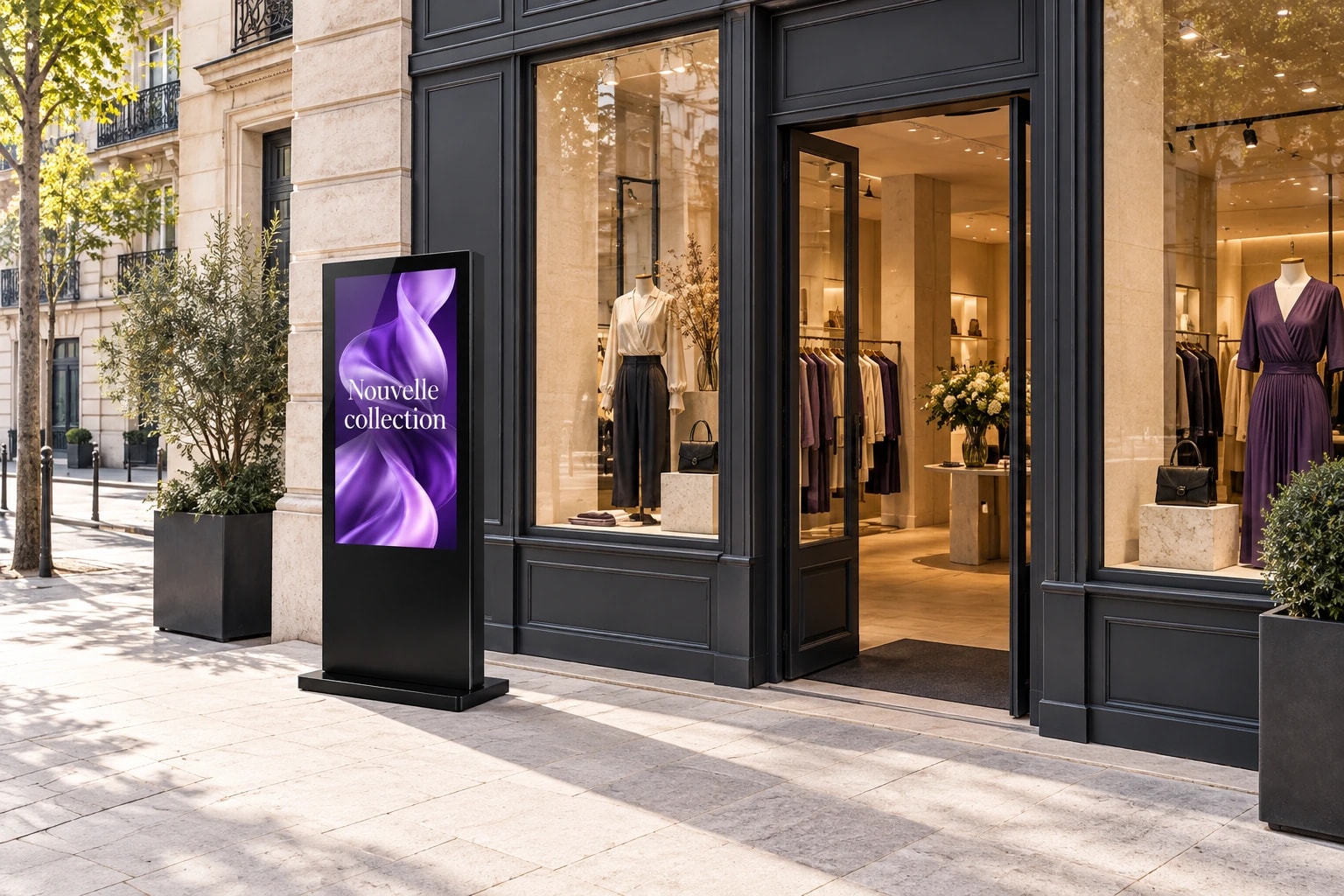
A display may look clear in the morning and become difficult to read when sunlight reaches the facade. Photograph the location at its brightest times and specify whether the screen will be behind glass or directly outside.
A brightness specification alone does not resolve reflections or heat. Exposure, manufacturer-specified ventilation and installation need to be assessed together. Ask for model validation for your setup rather than comparing only a number on a datasheet.
Measure viewing distance and reading time.
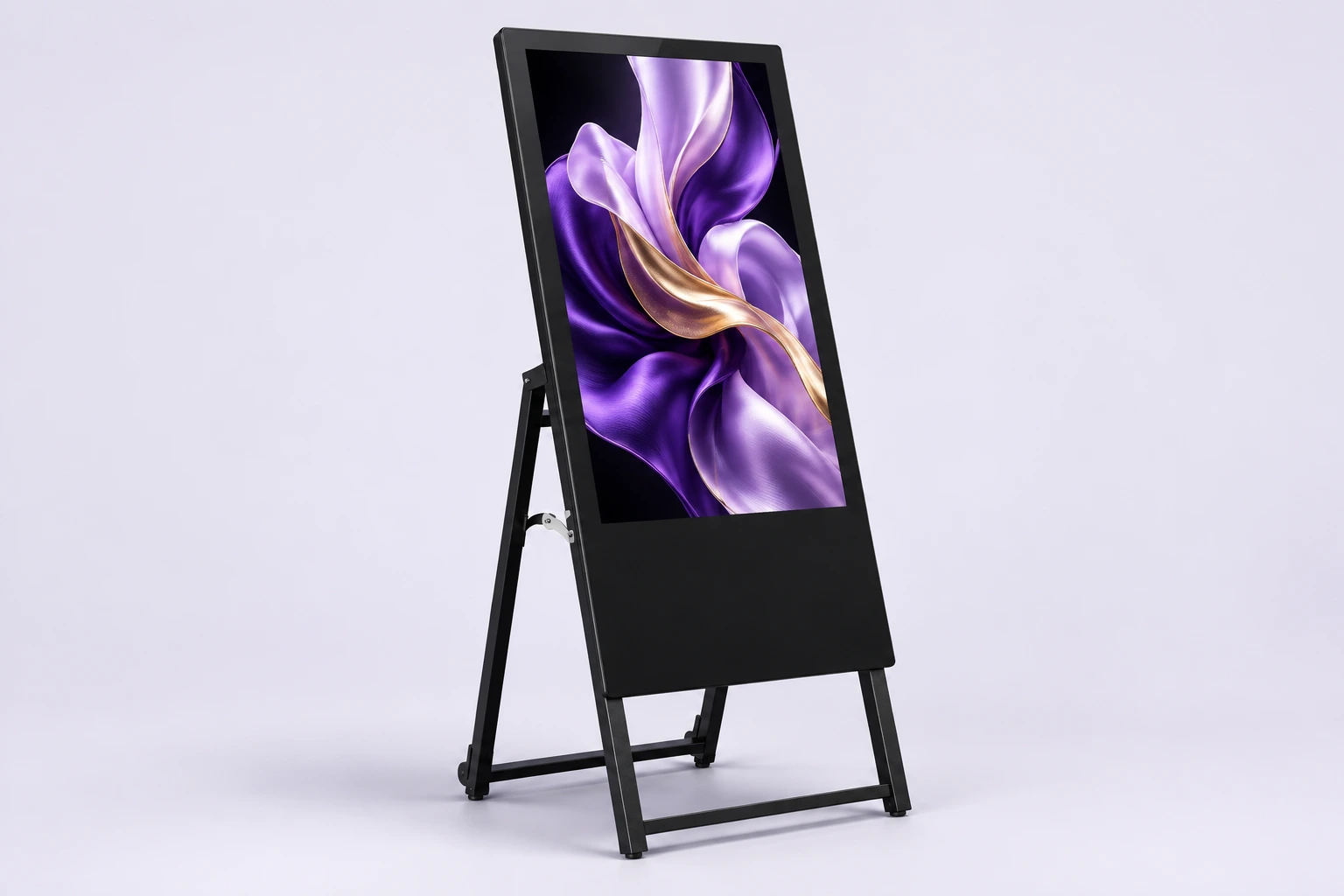
A display viewed from the opposite pavement has a different role from an A-frame beside the door. Note minimum and typical distances. Also identify whether people walk past or stop to read.
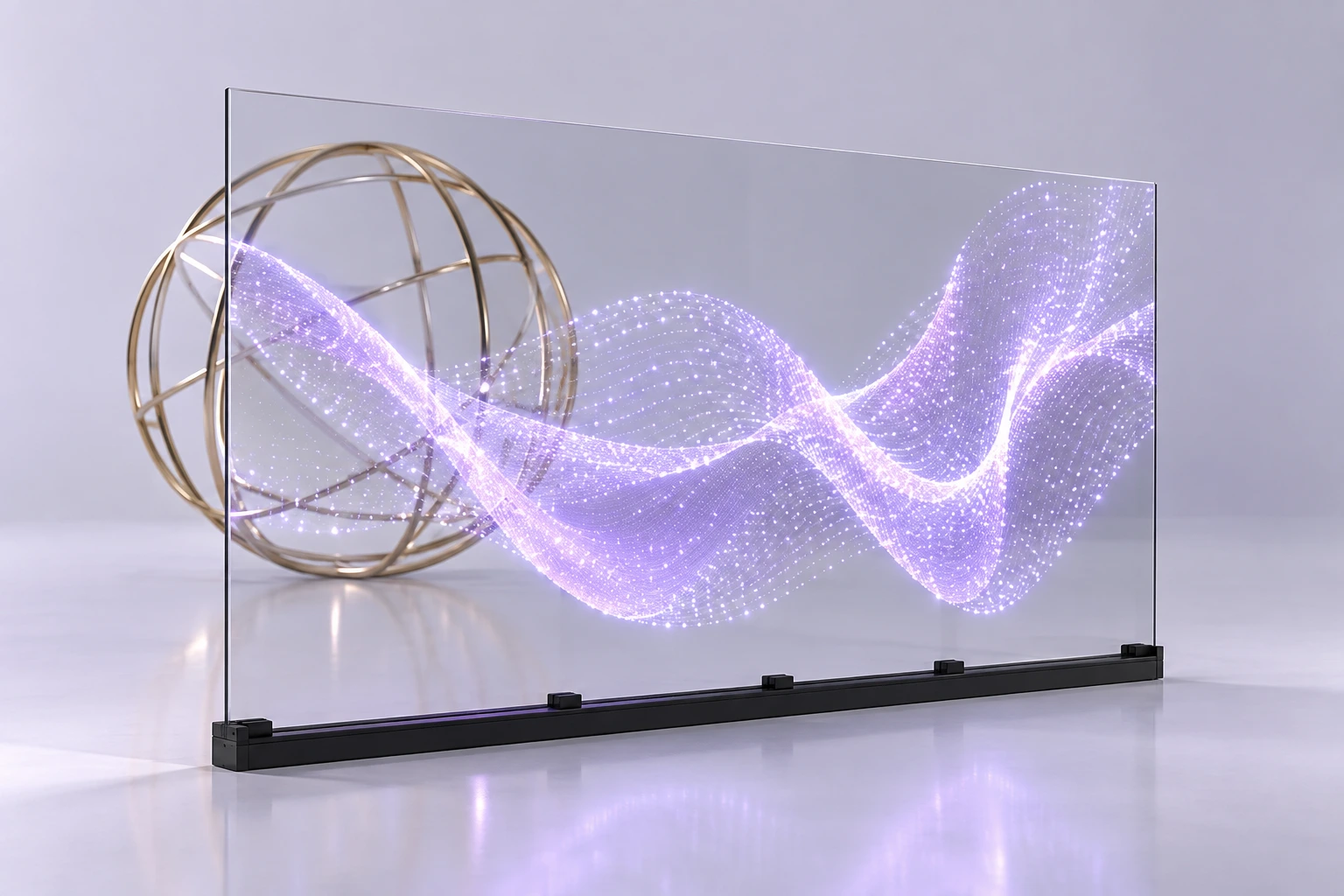
For LED film, pixel pitch should be chosen for viewing distance and content. A finer pitch brings the light points closer together and may suit closer viewing. Consider it alongside text size and the visual effect you want.
Choose a form that suits the space.
| Your priority | A format to explore | Check |
|---|---|---|
| Preserve transparency | Crystal LED film | Glass, viewing distance and installation |
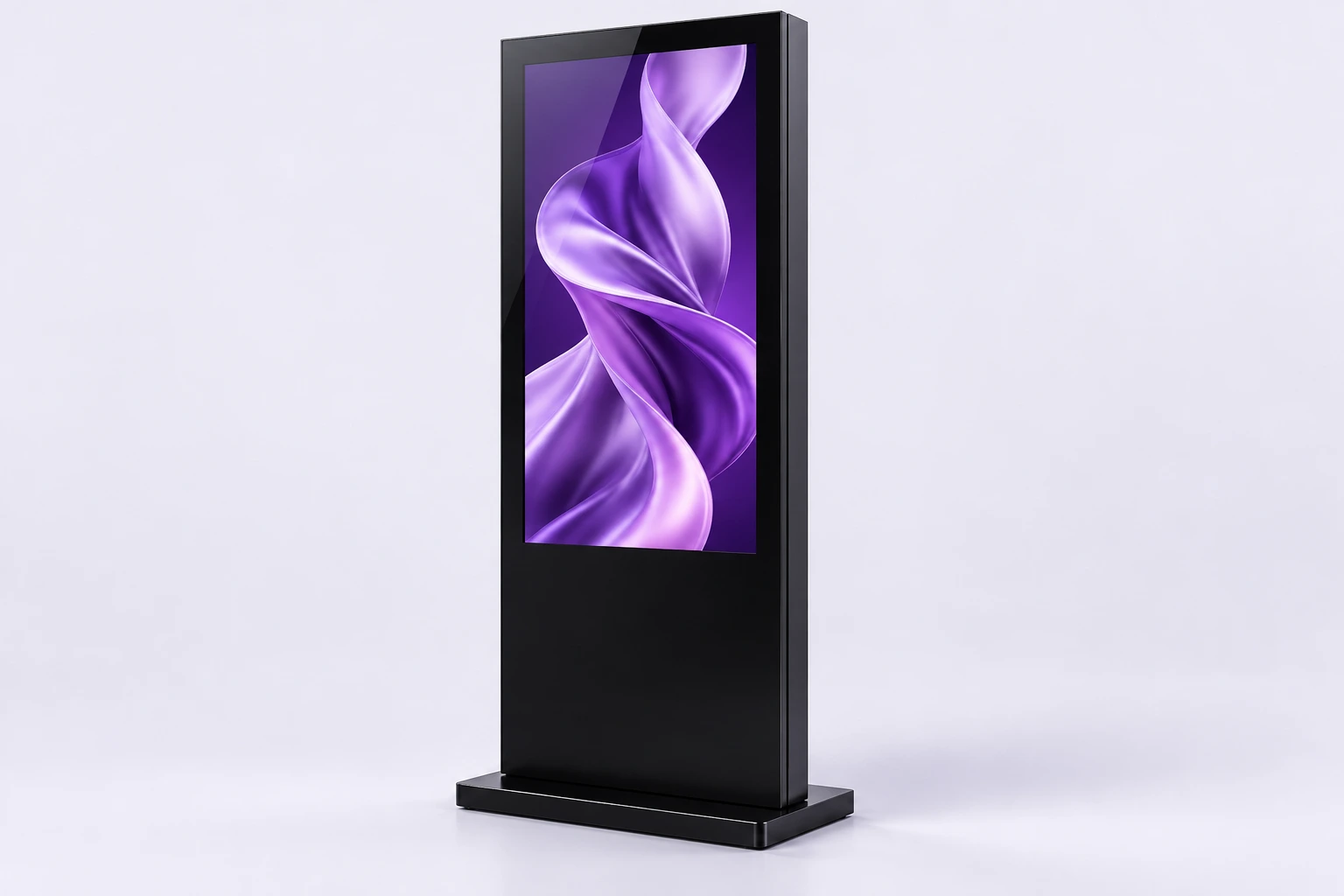
| Create an information point | Digital totem | Floor footprint and circulation |
| Move the message around | Digital A-frame | Storage, stability and power |
| Address two directions | Double-sided screen | Actual visibility of both sides |
Swipe the table to see every column.
Prepare a real visual before deciding.
Take an actual offer or message from your business and create a simple version: a headline, an image and one main piece of information. This quickly shows whether a format suits your needs. A dense menu and a collection photograph have different requirements.
Check portrait or landscape orientation and file proportions. Leave margins around text and avoid stretching an image to fill the screen. During setup, test files with the selected model’s player and settings.
What to prepare for a useful discussion.
Your location
Two or three photos, available width, facade orientation and power socket locations.
Your use case
Your audience, viewing distance and an example of the message you want to show.
Your organisation
Your preferred date, duration of use and who will keep content updated.