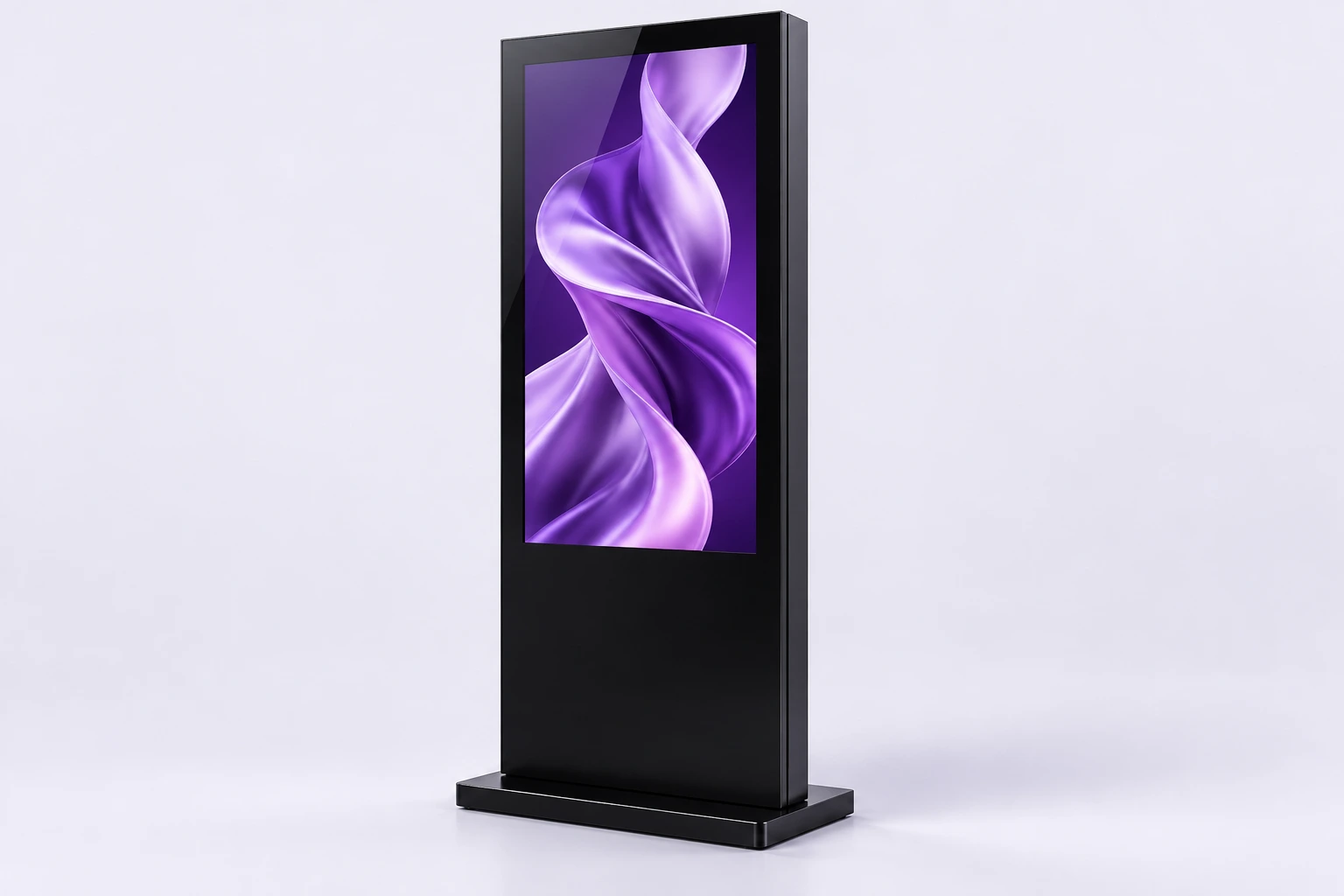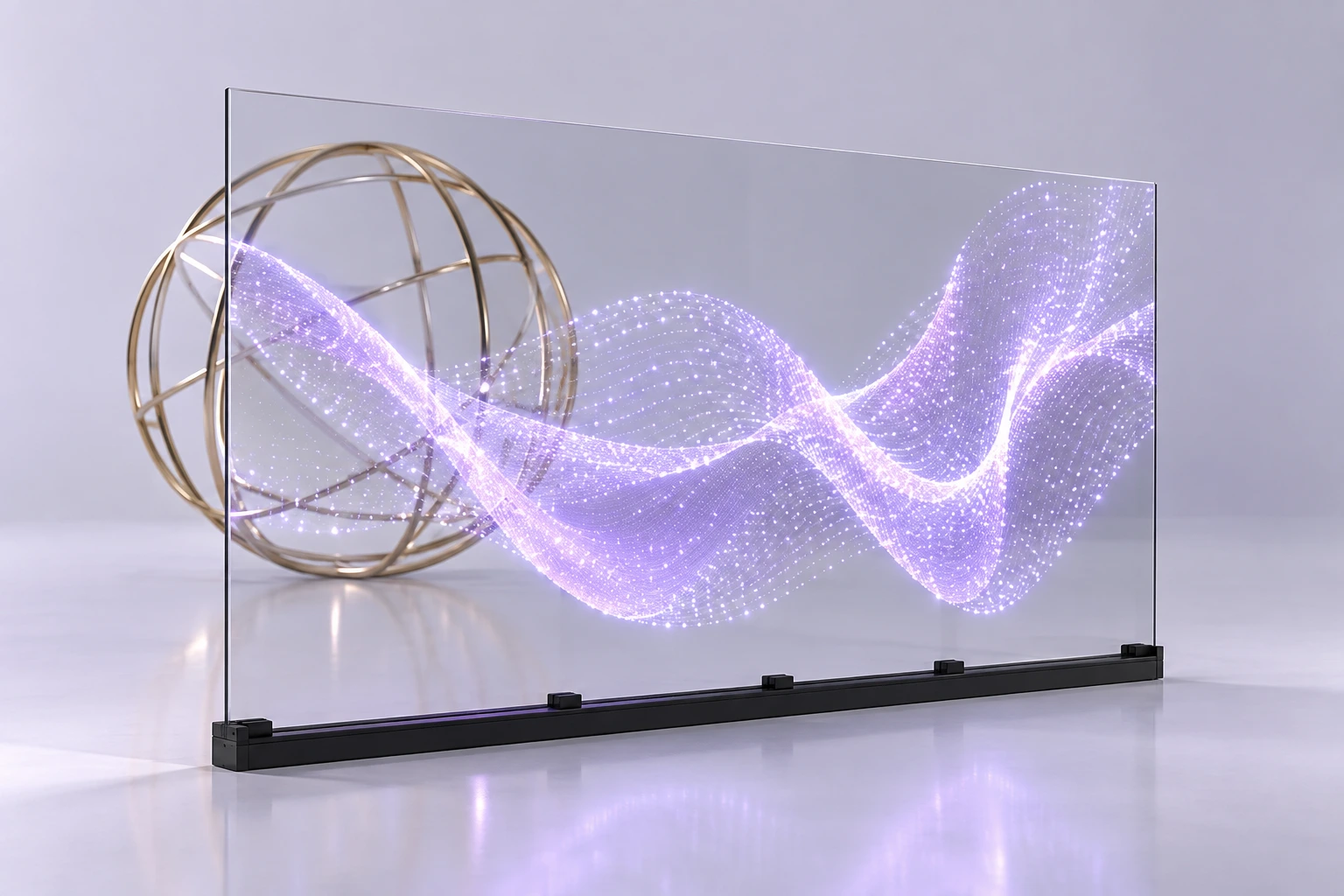
A luminous surface or an image on a solid background.
Transparent LED film uses a grid of light points applied to glass. Spaces between those points allow the background to remain visible. Content therefore visually overlaps the shop: the setting and light behind the glass contribute to the result.
An LCD screen shows an image on an opaque surface. The content background is controlled and can accommodate denser compositions. The device takes up physical space in a window or walkway, so placement and orientation remain important.
Compare uses, not just technologies.
| Criterion | Transparent LED film | LCD screen |
|---|---|---|
| Relationship with the window | Keeps a view through the surface | Occupies a dedicated opaque area |
| Content to favour | Simple images, silhouettes, short messages | Photos, menus and information on a controlled background |
| Close viewing | Depends in part on pixel pitch | Depends on resolution, format and text |
| Installation | Assessment of glass and power supply | Choice of mount, stand or placement |
Swipe the table to see every column.
This table presents selection criteria. Exact performance depends on the model and installation conditions.
Video content needs a different approach.
On a transparent surface, unlit areas reveal the setting behind. An animation designed for an opaque screen may lose readability if it contains too many small details. Favour clear shapes and assess the result against the actual background.
On an LCD, a solid background can isolate text. That is no reason to overload the screen: at a distance, a dominant image and a short message remain easier to understand than an entire page.
The two can serve complementary needs.
Film can animate a large glass area while an indoor totem presents a detailed offer. The two do not always need to compete. Start with the main use and add a second display only if it serves another purpose.