Start with the passer-by’s viewpoint.
Stand across the street, then a few metres from the entrance. Does a person see the window head-on or at an angle? Are they walking quickly? This determines screen orientation and message placement before you even choose a size.
A sunlit window and an interior with controlled lighting need different equipment. Note orientation, reflections and direct-sun periods. A display behind glass must also be assessed under those real conditions.
Three ways to fit into your shop.
Keep your window open
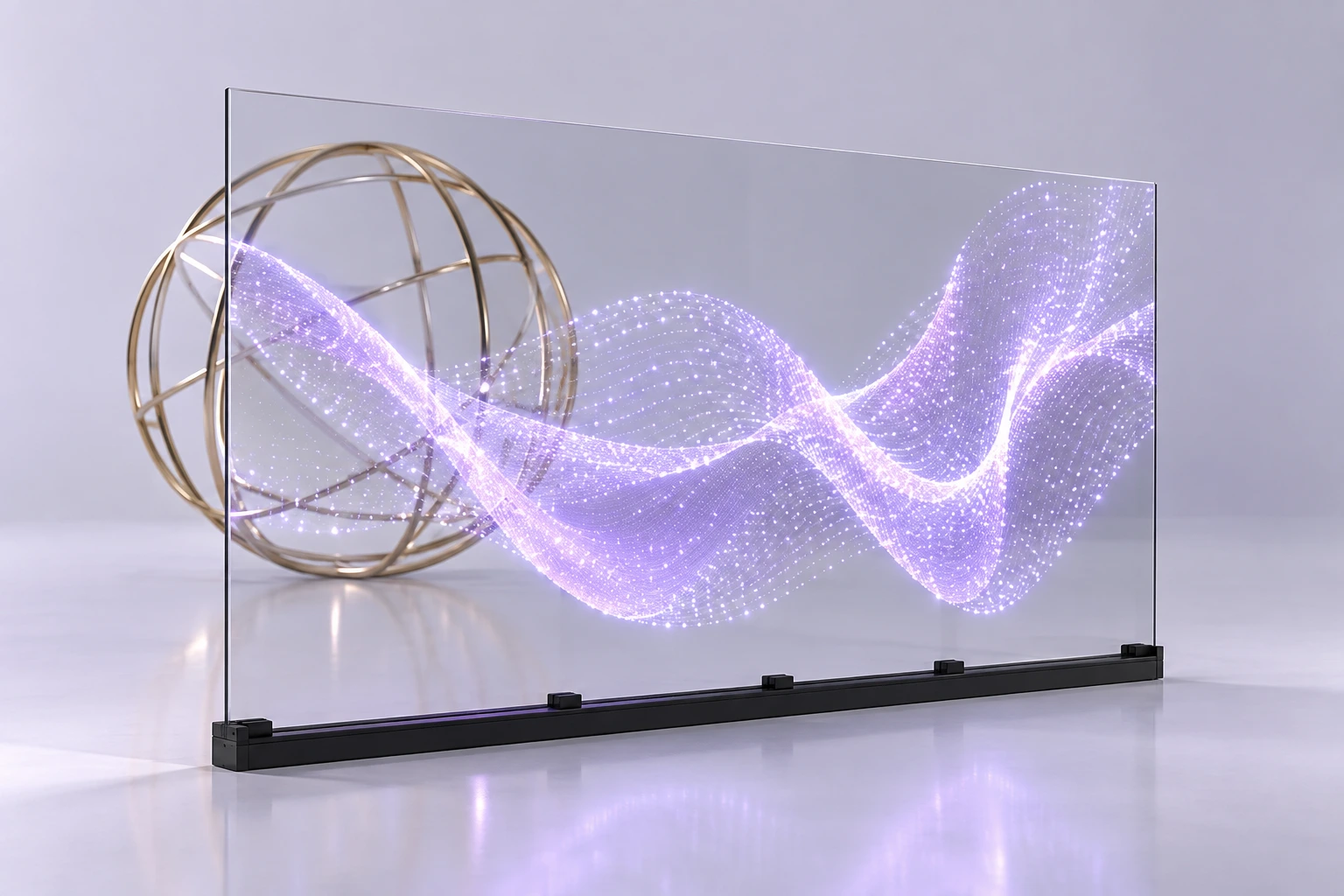
Crystal LED film brings glass to life while keeping the space behind visible. Use a simple visual composition that works alongside your products and window dressing.
Create a focal point
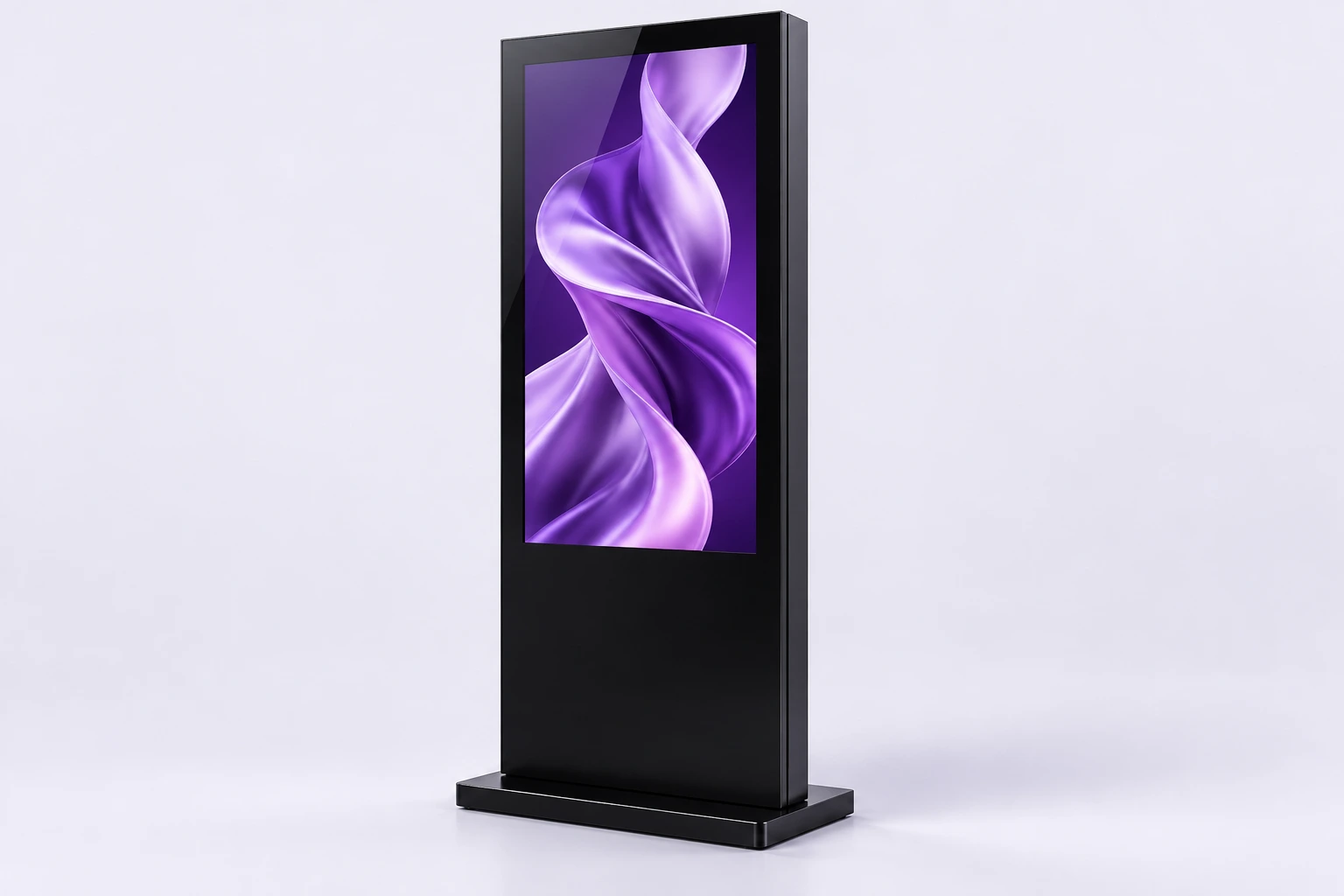
An indoor totem beyond the entrance can introduce a collection or direct shoppers to a department. Keep the walkway clear and leave room for the content to be read.
Follow your retail calendar
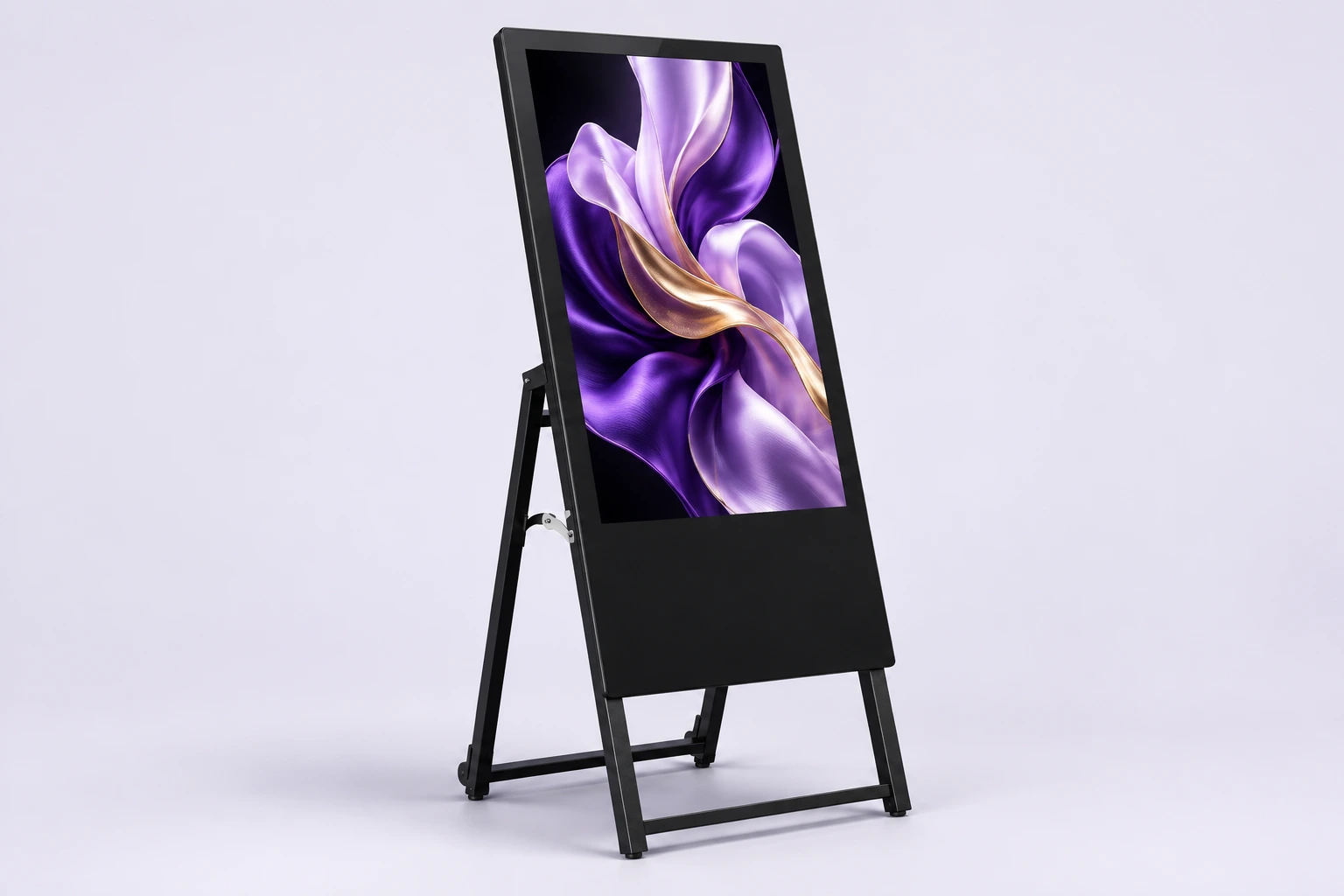
An A-frame suits a temporary promotion or a feature beside a display. Choose an indoor or outdoor version based on where it will actually be used.
One idea per screen. One clear invitation.
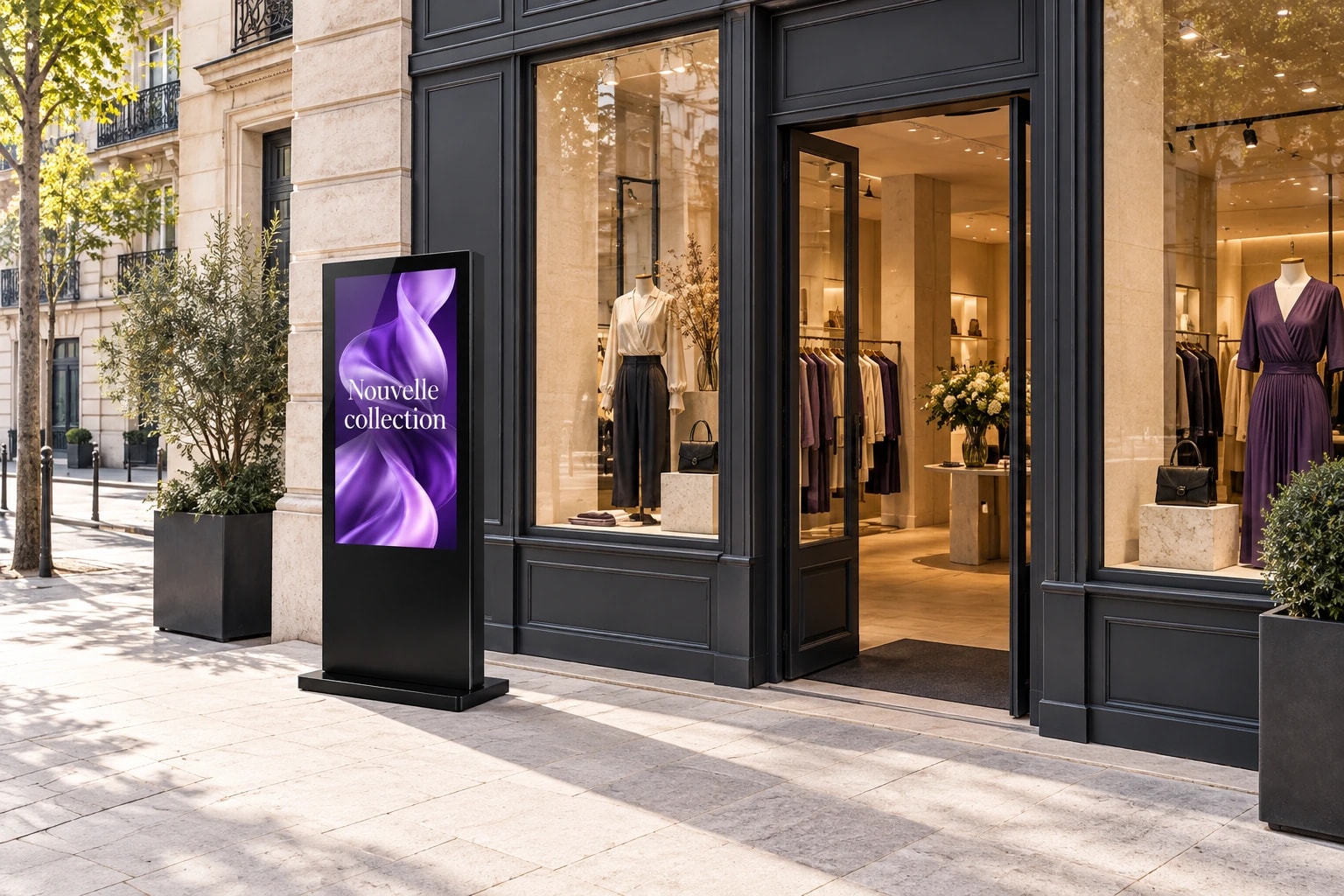
For a new collection, pair a strong photograph with a short headline. For an offer, make the product, price and validity period clear. For a service, explain how to use it. Avoid shrinking a full printed poster onto a screen.
Prepare several independent visuals instead of one long edit. You can then remove an expired offer or replace an unavailable product without rebuilding the entire programme. Test readability at the passer-by’s distance, not just on the computer used to create it.
Your questions, answered.
Does a shop window need an outdoor screen?
Not automatically. Placement behind or in front of glass, sunlight, heat and moisture need to be assessed together. Share a photo and the window orientation so we can discuss a suitable format.